Four Walls, One Room, Everybody Home: How Growing Up Cramped Made Us Who We Are
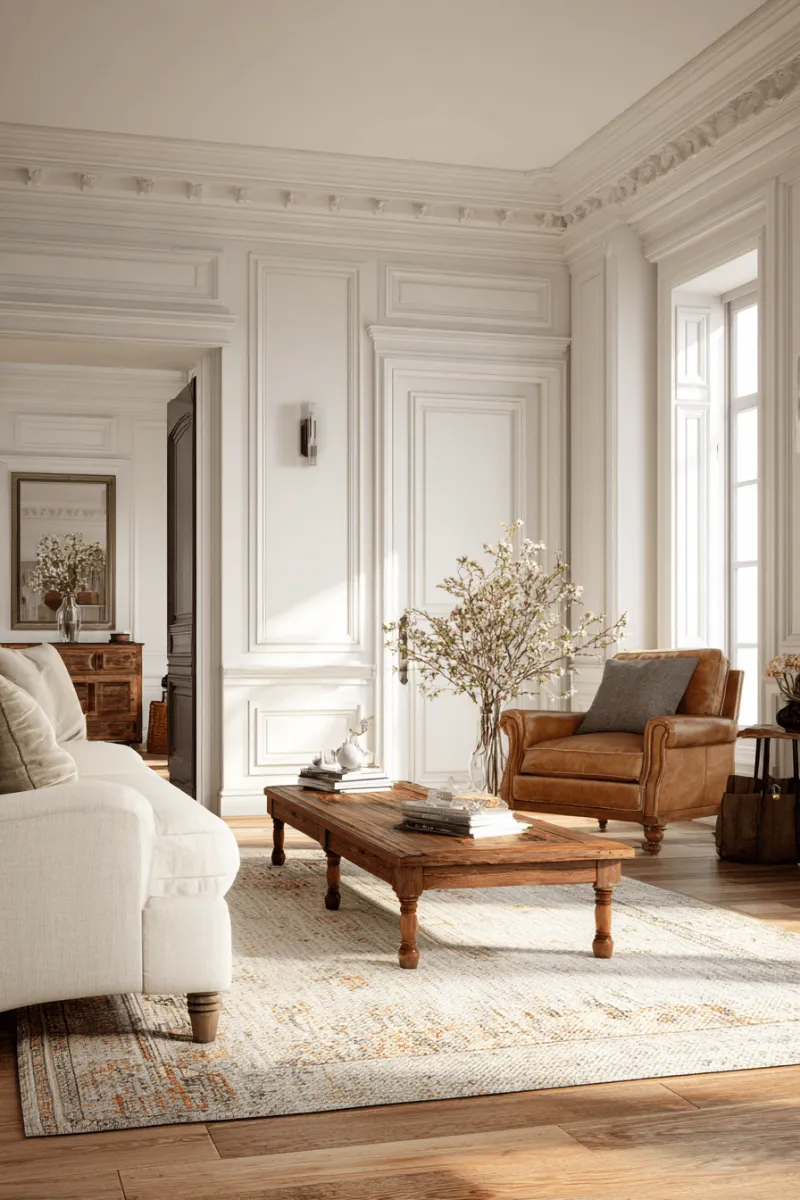
Photo: small cozy Eastern European apartment family living together vintage, via jennaliving.com
I want you to picture an apartment.
Not a New York apartment — though those get close. Something smaller. A Soviet-era block building somewhere in Poland or Ukraine or Romania, maybe eight hundred square feet for four people if you were lucky. A kitchen that was also a gathering space. A living room that converted into a bedroom at night. Walls thin enough that privacy was a concept you understood theoretically but never experienced.
Now I want you to picture the person who grew up there, living in a two-bedroom apartment in Manhattan, and watch them tell you — completely sincerely — that they feel too spread out.
This is not a joke. This is a real phenomenon. And it tells you something important about how space shapes people in ways that have nothing to do with square footage.
The Open Concept Lie
American real estate has been selling open-concept living for decades now as a kind of freedom. Knock down the walls. Let the light in. Let the family flow between spaces without barriers or borders.
Eastern European immigrants look at this and feel, almost universally, vaguely unsettled.
Not because they don't appreciate light or space — they do, deeply, especially those who grew up without much of either. But because the open concept assumes that what a family needs is physical openness, when what actually holds families together is proximity. Compression. The unavoidable presence of each other.
In a cramped apartment where the kitchen table is three feet from the couch and everyone can hear everyone, you cannot opt out of your family. You cannot disappear into your room and put on headphones and check out. You are in it, all the time, whether you like it or not.
And from that constant, low-grade, inescapable presence, something gets built that no floor plan can replicate.
What No Privacy Actually Teaches You
Let's be honest about what growing up without personal space costs you. The list is real: no room to process difficult emotions alone, no ability to have a private thought that doesn't eventually become family conversation material, no clear sense of where you end and everyone else begins.
American therapy culture has a lot to say about this, and not all of it is wrong.
But here's what it misses: the same conditions that make boundaries difficult also make connection effortless. When you've spent your entire childhood in close quarters with people who irritate you, love you, embarrass you, and feed you within the span of a single afternoon, you develop a kind of relational fluency that people raised in four-bedroom houses with their own bathrooms simply don't have.
You learn to read a room. You learn to exist alongside people you didn't choose. You learn that conflict doesn't end relationships — it's just Tuesday. You learn that love is not a feeling you protect in private; it's a practice that happens in public, in the middle of everything, with the TV on.
The McMansion Paradox
Here's something that Eastern European immigrants in America notice pretty quickly: the bigger the house, the lonelier the family inside it.
This isn't a universal law. But it's common enough to be a pattern. American families with space — real space, suburban-sprawl space — use it to separate. Kids get their own rooms at three. Teenagers vanish into their corners of the house. Parents have a master suite that functions essentially as a private apartment. Everyone is technically together and practically alone.
The Eastern European immigrant, watching this from the outside, feels something between confusion and mild grief.
Because what they're seeing is a family that has everything they grew up dreaming of — space, privacy, quiet — and used it to stop knowing each other.
Why We Can't Fully Leave
There's a reason Eastern European immigrants struggle with the American ideal of "leaving home." Not the physical act — they've done that, often dramatically, crossing oceans and time zones and language barriers. But the psychological version, the one where you become a fully autonomous individual with clean emotional boundaries and your parents are just two people you see at Thanksgiving.
That model requires a kind of compartmentalization that was simply never installed.
When you grow up in a space where there are no compartments, you don't learn to think of family as one category of your life that fits neatly alongside career, friendships, and personal growth. You learn to think of it as the water you swim in. It's not separate from everything else. It is everything else.
This makes certain American milestones — moving across the country for a job, choosing a partner your parents disapprove of, establishing yourself as an individual first and a family member second — feel not just difficult but somehow conceptually wrong. Like you're violating a physics law that was written into you before you had words for it.
The Thing the Small Apartment Actually Built
Here's what I keep coming back to: the people I know who grew up in those cramped Eastern European apartments are, almost without exception, extraordinarily good at being with people.
Not in the networking sense. Not in the LinkedIn-connection sense. In the actual human sense — the ability to sit with someone in discomfort, to be present without performing presence, to exist alongside another person without needing the interaction to be productive or meaningful or going somewhere.
This is a rare skill. It's becoming rarer.
And it came directly from having no choice but to be in the room with everyone, all the time, for the first eighteen years of life.
The small apartment didn't just house a childhood. It built a capacity for closeness that no amount of space — however beautiful, however well-lit, however perfectly open-concept — can manufacture.
Some of us are still figuring out what to do with that in a country that keeps trying to sell us more room.