One Month of Living Eastern European: The Uncomfortable Lessons I Didn't Expect
Let me be honest about where this started. I was standing in a Whole Foods in Chicago, holding a $14 jar of pasta sauce, and I had a small, quiet crisis. Not about the pasta sauce specifically. About the fact that I had bought approximately 400 jars of similar pasta sauce over the course of my adult life without once questioning whether this was a reasonable way to exist.
I'd been spending time on Davalka, reading about Eastern European life, and I kept bumping into this recurring theme: a kind of practical unsentimental wisdom about resources, community, and the gap between what you need and what consumer culture tells you that you need. So I decided to try it. For thirty days, I would genuinely attempt to live by principles I'd observed in Eastern European culture — not as a poverty cosplay or a viral challenge, but as a real experiment in a different relationship with everyday life.
Here's what actually happened.
Week One: The Shopping Revelation
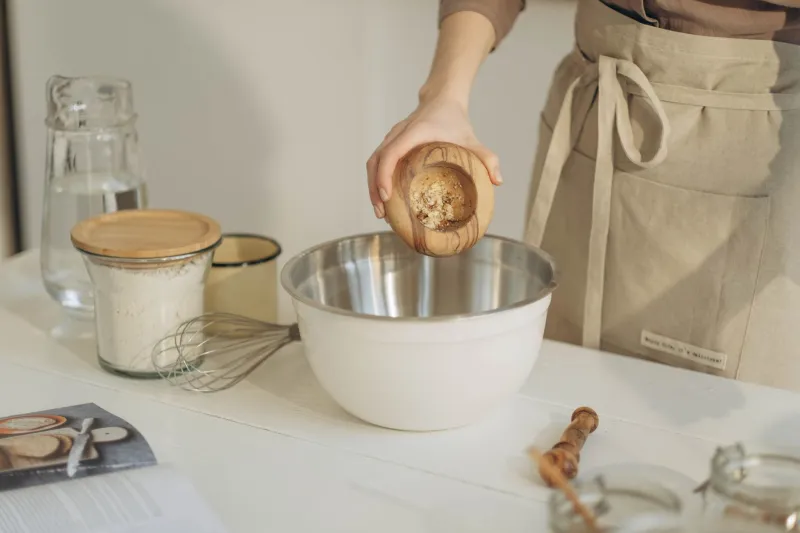
The first rule I set for myself: buy ingredients, not meals. This sounds obvious until you realize how much of American grocery shopping is actually the purchase of assembled or semi-assembled food. Sauces, marinades, pre-seasoned proteins, meal kits, ready-to-heat grains. Convenience packaged as cooking.
Eastern European kitchen culture — at least as practiced by the people I'd spoken with and the households I'd visited — operates differently. You buy flour, eggs, cabbage, onions, potatoes, dried beans, whatever's cheap and seasonal. You learn to do more with those things than the package instructions suggest. You make stock from bones. You use yesterday's bread in today's breakfast.
Week one was humbling. I burned two batches of beans. I made a beet salad that tasted like disappointment. But by day seven, I had also made a pot of soup that cost about $3 and fed me for three days, and I felt an unreasonable amount of pride about it — the kind of satisfaction that no amount of DoorDash has ever produced.
The financial difference was immediate and significant. My grocery spending dropped by roughly 40 percent. More surprising was the mental shift: when you're working with simple ingredients, you actually think about what you're eating. The mindlessness that I'd accepted as a feature of modern convenience food turned out to be a bug.
Week Two: Healthcare Without the Panic
This is where the experiment got philosophically thorny.
I came down with a sinus infection in week two — the kind that in my normal American life would send me immediately to urgent care, a $200 copay, and a prescription for antibiotics I may or may not have needed. Instead, I tried the Eastern European approach that multiple people had described to me: wait, observe, treat conservatively, and only escalate if genuinely necessary.
I drank hot tea with honey and lemon. I used a saline rinse. I slept an extra two hours a night. I ate garlic in quantities that were antisocial. I gave it five days.
The infection cleared. I spent $0 on healthcare that week.
I want to be careful here, because this isn't an argument against medicine or a suggestion that people should skip necessary treatment. What I observed in Eastern European attitudes toward health is less about avoiding doctors and more about not defaulting immediately to the most expensive, most interventionist option available. There's a triage instinct — a willingness to let the body try before outsourcing the problem — that American healthcare culture has largely trained out of us, partly because the system financially incentivizes intervention.
The lesson wasn't "don't go to the doctor." It was "know the difference between a problem and an inconvenience."
Week Three: Community Without an App
This was the hardest week, and the most revealing one.
Eastern European community infrastructure — the kind that functions as a genuine social safety net — is built on proximity and regularity. You know your neighbors not because you downloaded a Nextdoor account but because you see them at the market, in the hallway, at the corner that everyone passes on the way somewhere else. Relationships are maintained through small, consistent contact rather than scheduled social events.
In my Chicago apartment building, I knew the name of exactly one neighbor. I resolved to change that.
I started leaving my door open on weekend mornings. I brought homemade food to the woman on the third floor who I knew worked night shifts. I stopped wearing headphones in the elevator. These are not revolutionary acts. They are embarrassingly small. But within two weeks, I had borrowed a tool I needed, been offered homemade jam by someone I'd previously only nodded at, and had three actual conversations in my own building — which, in three years of living there, was three more than I'd had before.
The Eastern European insight here isn't that community is warm and nice and good for you. It's that community is functional. It reduces costs, provides information, creates redundancy when individual resources fail. It's infrastructure, not sentiment. Americans tend to romanticize community while systematically designing it out of their lives.
Week Four: The Repair Reflex
Something broke in week four — a zipper on a jacket I'd owned for two years. My immediate instinct was to replace it. The Eastern European reflex, I'd learned, is to fix it.
I found a tailor eight blocks from my apartment — a woman who had been operating out of the same small shop for twenty-three years and whom I had walked past approximately 300 times without ever registering she existed. She fixed the zipper for $8 and had it done by the next afternoon.
This triggered a small audit. I went through my apartment looking for things I'd replaced when they could have been repaired, things I'd bought when I could have borrowed, things I owned that I used fewer than five times a year. The list was long and uncomfortable.
Eastern European resourcefulness isn't about suffering through broken things or living in deprivation. It's about having a different default — repair before replace, borrow before buy, make before purchase — that emerged from economic necessity but turns out to be genuinely rational even when necessity isn't the driver.
What I Actually Kept
At the end of thirty days, I didn't transform into a different person. I still buy things I don't need. I still sometimes choose convenience over effort. But a few things stuck.
I now cook from ingredients at least five days a week. I know four of my neighbors by name. I have a tailor, a cobbler, and a relationship with the woman at the farmer's market who sells me vegetables that are slightly ugly and significantly cheaper than the pretty ones at the grocery store. I wait three days before buying anything that costs more than $50, which has eliminated approximately 60 percent of those purchases.
None of this is Eastern European culture. It's a loose, imperfect translation of a set of values that formed under very different conditions. But the core of it — the skepticism toward consumption as a solution, the investment in relationships as infrastructure, the comfort with doing more with less — travels remarkably well.
The $14 pasta sauce, for the record, I make myself now. It takes twenty minutes and tastes better. This is not a metaphor. Or maybe it is. I'm still deciding.