Bass Lines and Broken Towns: How Underground Music Is Pulling Eastern Europe Back From the Edge
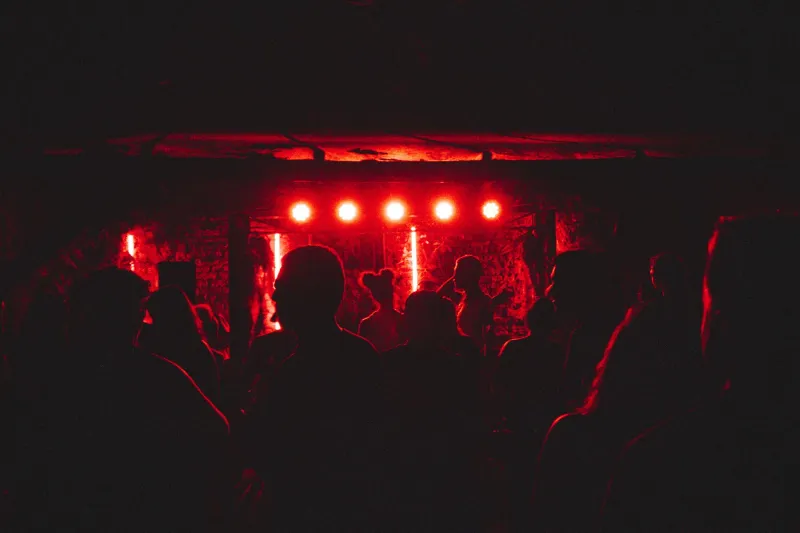
The building used to make washing machines. Now, on a Friday night in late September, it makes something harder to quantify — a low, persistent thud that you feel in your sternum before you hear it with your ears. About 400 people are inside a repurposed factory floor in Łódź, Poland's former textile capital, dancing under exposed pipes and salvaged neon signs to a DJ who flew in from Berlin for what amounts to a $12 ticket price.
Outside, the neighborhood is a patchwork of Soviet-era apartment blocks, shuttered storefronts, and a single 24-hour kebab place doing brisk business. Unemployment in this part of the city runs high. The young people who could leave mostly did. But tonight, they came back — or maybe they never left, and this is why.
The Geography of Decline (And Its Soundtrack)
The story of post-communist economic collapse has been told many times, usually in the language of statistics: GDP contraction, emigration figures, industrial output, foreign investment flows. What the statistics don't capture is what it actually feels like to grow up in a place that the world decided wasn't worth caring about anymore.
Across the former Eastern Bloc — from Poland's rust belt cities to rural Bulgaria, from Moldova's provincial capitals to the smaller towns of western Ukraine — whole communities were left to make sense of an economic whiplash that went from centrally planned certainty to chaotic market exposure in the span of a few years. Factories closed. Young people left. Main streets hollowed out.
What's surprising — and genuinely worth paying attention to — is where the counter-movement started. Not in government offices or international development agencies. In basements. In abandoned warehouses. In fields outside of towns where someone dragged a generator, rigged up speakers, and told 200 people to show up at midnight.
Łódź: From Textile Capital to Creative Hub
Łódź is the most visible example of a city that used music and arts culture as an unlikely economic lever. Once the center of Poland's textile industry, it was devastated by deindustrialization in the 1990s. Population declined. Buildings crumbled. The city developed a reputation as the place you passed through on the way to Warsaw.
Then something shifted. Low rents attracted artists, musicians, and small creative businesses priced out of the capital. The OFF Festival — originally a scrappy alternative to Poland's more corporate music events — helped establish the city's credibility as a destination. Venues like Fabryka Sztuki and later a constellation of smaller clubs created infrastructure that didn't exist a decade before.
"We didn't have a plan," admits Tomek, who co-founded a small club in a former printing facility. "We had a building we could afford and friends who wanted somewhere to play. The economic development stuff — that came later, when people started noticing what was happening."
What was happening, it turned out, was a recognizable pattern: cultural investment precedes economic investment. The same story played out in Brooklyn before it became unaffordable, in Detroit's Corktown neighborhood, in East Nashville. Artists and musicians move where rent is cheap and community is possible. Other people follow the energy.
Bulgaria's Festival Circuit: Fields, Forests, and Something Like Hope
Bulgaria presents a different version of the same phenomenon. Rather than urban regeneration, the country has seen a proliferation of outdoor festivals in rural and semi-rural settings — events that bring thousands of visitors to towns that would otherwise register zero tourist traffic.
Spirit of Burgas, held annually on Bulgaria's Black Sea coast, is the most internationally recognized. But the more interesting story is happening at smaller, weirder events scattered across the interior: festivals in mountain villages, gatherings in abandoned quarries, weekend events that combine electronic music with hiking, local food markets, and something approaching a communal experiment in living differently.
"These festivals are not just entertainment," says Daniela, a Sofia-based journalist who has covered the Bulgarian music scene for a decade. "They are places where people practice being together in a way that the rest of their week doesn't allow. And they bring money to places that have nothing else. Local farmers sell food. People rent rooms. A village that would otherwise be invisible is suddenly on the map for a weekend."
The economic impact of even a mid-sized festival in a depressed rural area can be significant. Studies of festival tourism across Central and Eastern Europe consistently find multiplier effects that outperform conventional tourism development spending — and do so without requiring the kind of infrastructure investment that cash-strapped local governments can rarely afford.
The Venue Owners Nobody Talks About
Behind every scene is a network of people making deeply impractical financial decisions for reasons that don't fit neatly into a business plan. In Kyiv's pre-war years, the Podil neighborhood was home to a cluster of clubs and venues that operated on margins so thin they were essentially community projects with a cover charge. In Bucharest, spaces like Control and Expirat became genuine cultural institutions built on the stubbornness of their founders rather than investor backing.
"You don't open a venue in Romania to make money," says Radu, who has run a small concert space in Timișoara for seven years. "You open it because without it, there's nowhere for this music to happen, and then the musicians leave, and then the audience leaves, and then the city is just a place where people wait to retire."
That framing — cultural infrastructure as retention strategy — is one that urban planners in the US are slowly starting to take seriously, particularly in Rust Belt cities facing exactly the dynamics that Eastern Europe has been navigating for thirty years. Cleveland, Gary, Youngstown: the parallels are uncomfortable but instructive.
What the Rust Belt Could Learn From Łódź
The Eastern European model isn't perfectly transferable. Different histories, different political contexts, different relationships between local government and civil society. But some principles hold across geographies.
First: cheap space is the foundation. Every scene described here started because artists and organizers could access affordable venues — usually because nobody else wanted them. Policies that protect affordable creative space in declining cities aren't charity; they're economic development with a longer time horizon.
Second: don't wait for a plan. The most successful cultural revivals in Eastern Europe happened organically, without a steering committee or a branding strategy. What they had was permission — explicit or implicit — to try things in spaces that had nothing to lose.
Third: local music is local identity. When a town has a scene — a sound, a venue, a reason to come back on weekends — it has something that economic statistics can't measure but residents absolutely feel. It has a reason to stay.
Back in Łódź, the DJ is deep into his second hour. The crowd has grown. Someone near the bar is explaining to a friend, in Polish, why they drove two hours from Warsaw for this. The answer, as best I can translate it, is something like: because this is the only place I feel like myself.
That's not a metric. But it might be the whole point.